

Dogoteka
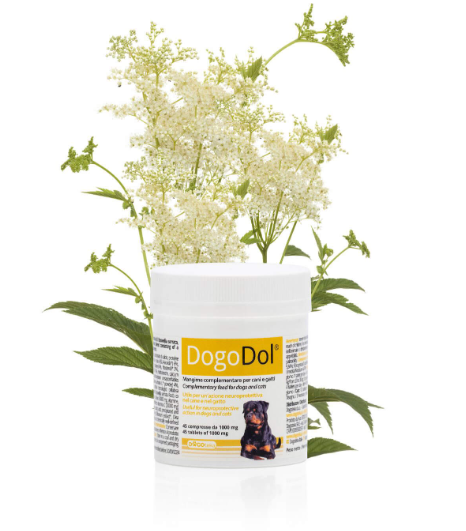
DOGOTEKA DOGOdol 45 tablets.
DOGOTEKA DOGOdol 45 tablets.
Couldn't load pickup availability
Description
Description
DOGOdol®
DOGOdol® is a complementary feed for dogs and cats with neuroprotective effects.
Neuroprotection is a strategy aimed at maintaining the functionality of neuronal cells. More and more studies show that oxidative stress causes neurological changes. Especially when the changes that occur after damage to sensitive nerve fibers are associated with the sensitization of pain receptors, which leads to the characteristic symptoms of neuropathic pain. In order to ensure a neuroprotective effect, it may be useful to use substances with antioxidant effects. Also suitable after cesarean section or any other surgery.
Active ingredients
PALMITOYLETHANOLAMIDE (PEA) - Chemically, PEA is the amide of palmitic acid with ethanolamine. It is an endogenous molecule that is particularly abundant in brain tissue. It is also found in many foods, such as soy, tomatoes, eggs, peanuts, peas, etc. PEA is synthesized endogenously after stimuli that can trigger an immune response; several studies have shown how endogenous PEA levels can change after inflammatory processes. PEA has antioxidant properties; at the cellular level, this may manifest itself as a neuroprotective effect.
UNSAPONIFIED AVOCADO AND SOYBEAN FRACTION – Avocado oil and soybean oil, like all oils, consist of a predominant component called the “saponifiable fraction,” which is made up of triglycerides, diglycerides, and monoglycerides, and a component called the “unsaponifiable fraction,” which is made up of a variety of secondary compounds. The unsaponifiable fraction of an oil is the chemical component that does not react with caustic soda and therefore remains in solution. (Unsaponifiables are components of a fatty substance (oil, fat, wax) that do not form soap when exposed to alkali and remain insoluble in water but are soluble in organic solvents.) It is rich in various chemical components that vary depending on the type of oil. In avocado oil, it makes up about 2-12% of the oil and is mainly composed of phytosterols, terpene alcohols, avocatin, volatile acids, and fat-soluble vitamins, including vitamin E; in soybean oil it constitutes about 2% of the oil and is mainly composed of soy lecithin and phytosterols. These two fractions are a group of components in the ASU-Avovida® component, which has been the subject of numerous studies that have highlighted health effects at both joint and muscle level, in particular, highlighting the chondroprotective effect. The action seems to be related to the increase in collagen synthesis in articular chondrocytes mainly due to phytosterols (beta-sitosterol, beta-sitosterolglucoside, stigmasterol, capesterol), which are among the main components of ASU-Avovida®.
SWAMP SPRING (SPIREA (FILIPENDULA) ULMARIA) - - is a perennial herbaceous plant belonging to the Rosaceae family. It grows naturally in humid mountainous and hilly areas, especially along water bodies. The flowering tops of this plant are mainly used, which are collected in June-July, when flowering begins. At the beginning of the 19th century, salicylic acid was first isolated from Spirea ulmaria, the precursor of the well-known synthetic aspirin, which takes its name from this plant. Phytochemical analyses have shown that species of this plant are particularly rich in polyphenols, including flavone glycosides and ellagitannins. In vitro studies have shown that Spirea Ulmaria polyphenols have antioxidant properties and can also inhibit the synthesis of various immune response mediators, such as prostaglandin E2 (PGE2) and thromboxane B2 (TXB2).
PHYTOSTEROLS are plant sterols, which are particularly abundant in vegetable oils, nuts, legumes, seeds, grains, fresh fruits and vegetables. They are chemically similar to cholesterol, so by imitating its structure due to the steric effect (which reduces the rate of chemical reactions), they can reduce its absorption in the intestine, controlling its concentration in the plasma. Over the past 15 years, several studies have revealed other equally important properties of phytosterols, including some immune activity. Their activity in the immune system seems to be
At the level of T lymphocytes, it mainly occurs at the level of specific lymphocytes or helper T lymphocytes (TH1 and TH2), helping to maintain their normal function and thus supporting specific immunity.
BOSWELLIA SERRATA Roxb. ex Colebr.: - olibanum) extract: Boswellia serrata is a moderately to highly branched tree of the Burseraceae family. It grows in the arid mountainous regions of India, North Africa and the Middle East. The part of the plant used is the resin, which is obtained by cutting into the tree trunk and stored in a bamboo basket specially made to remove the oil and harden the resin. (The plant is famous for the incense (frankincense or olibanum) made from its resin.) Boswellia oleogum resin contains about 30-60% resin, 5-10% essential oils, and the rest is polysaccharides. The resinous fraction of Boswellia serrata is mainly composed of mono-, di- and triterpenes and pentacyclic triterpenic acids such as β-boswellic acid, acetyl-β-boswellic acid, 11-keto-β-boswellic acid and acetyl-11-keto-β-boswellic acid. In vitro and animal model studies have shown that boswellic acids act by inhibiting the synthesis of some mediators of the immune response, such as the enzyme 5-lipoxygenase and leukotrienes, which promote free radical damage.
OLIVE TREE EXTRACT . The olive tree (Olea europea L.) is a fruit tree cultivated in many parts of the world, but its main cultivation area is the Mediterranean region. The main product obtained from the olive tree is the oil, extracted from the fruit - a fleshy ellipsoidal or ovoid drupe consisting of a pulp containing oil and a woody and wrinkled stone. Olive oil has been widely studied for its antioxidant properties, which are determined by the high content of phenolic components. However, these substances are primarily found in olive leaves. Phenolic compounds are products of secondary plant metabolism. In the case of the olive tree, they are a consequence of the response to pathogen attacks and insect damage. Five groups of phenolic compounds have been identified in olive trees: oleuropeosides (oleuropein and verbascoside); flavones (luteolin-7-glucoside, apigenin-7-glucoside, diosmetin-7-glucoside, luteolin and diosmetin); flavonols (rutin); flavan-3-ol (catechin) and phenolic derivatives (tyrosol, hydroxytyrosol, vanillin, vanillic acid and caffeic acid). Phenolic compounds have antioxidant properties or neutralize free radicals. Free radicals are products that are formed during physiological chemical reactions that use oxygen and are highly reactive chemicals. When these substances are formed in excess, oxidative damage can occur at the cellular level. Such cellular damage is associated with an increased risk of developing chronic diseases, so the consumption of substances with antioxidant effects is believed to be beneficial in reducing oxidative damage.
VITAMIN C is a water-soluble vitamin and is an essential nutrient, as it is not synthesized by different mammals. It is mainly found in foods of plant origin, such as some fresh acidic fruits (citrus fruits, pineapples, strawberries, cherries, etc.), fresh vegetables (lettuce, chicory, spinach, broccoli, cabbage, tomatoes, peppers, etc.) and tubers (potatoes). It is a potent antioxidant and a cofactor for a family of biosynthetic and gene regulatory enzymes. Vitamin C contributes to immune defense by supporting various cellular functions of the innate and adaptive immune systems. It plays an important role as an epithelial barrier against pathogens and promotes the oxygen radical scavenging activity of the skin, thus potentially protecting against environmental oxidative stress. Vitamin C accumulates in phagocytic cells, such as neutrophils, and can enhance chemotaxis, phagocytosis and the generation of reactive oxygen species, and ultimately the killing of microbes. It is also involved in the mechanism of cell apoptosis and in the removal of exhausted neutrophils from sites of infection by macrophages, thereby reducing necrosis and potential tissue damage. The role of vitamin C at the level of specific or so-called adaptive immunity cells is less clear, but some studies have shown that vitamin C improves the differentiation and proliferation of B and T cells (specific immune cells), probably due to its gene regulatory effects. Vitamin C deficiency can lead to reduced immunity. Therefore, vitamin C supplements may be particularly useful for supporting immune function.
Composition
Palmitoylethanolamide (PEA) 16%, maltodextrin, calcium carbonate, hydrolyzed animal protein (from chicken), unsaponifiable avocado and soy fraction (ASU-Avovida®) 6%, herbal processing products: (Spirea ulmaria L. * powder) 4%, phytosterols * 3%, magnesium stearate.
Additives 1 kg: Technological additives: microcrystalline cellulose, precipitated silicic acid and dried; flavoring: Boswellia serrata Roxb. ex Colebr .: Olibanum extract * 50,000 mg, Olea europaea L .: Olive extract 50,000 mg, vitamins, provitamins and chemically well-defined substances with similar effects: vitamin C (20,000 mg)
One 1000 mg tablet contains:
Palmitoylethanolamide (PEA) 160 mg
Unsaponifiable fraction of avocado and soy (ASU-Avovida®) 60 mg
Spirea ulmaria powder 40 mg
Phytosterols 30mg
Boswellia serrata Roxb. ex Colebr .: Frankincense - Boswellia serrata extract 500 mg
Olea europaea L.: olive extract 500 mg
Vitamin C 200 mg
Dosage and method of administration
Cats ½ tablet
Dogs up to 10 kg - 1 tablet
Dogs 10-20 kg - 2 tablets
Dogs 20-30 kg - 3 tablets
Dogs 30-40 kg - 4 tablets
Dogs over 40 kg - 5 tablets
Mix into the animal's food or feed directly into the mouth for approximately 7-10 consecutive days. If necessary, repeat for another 10 days and continue as long as needed.
Packaging : DOGOdol® 45 tablets
Share
 Reksas AI
Reksas AI
