
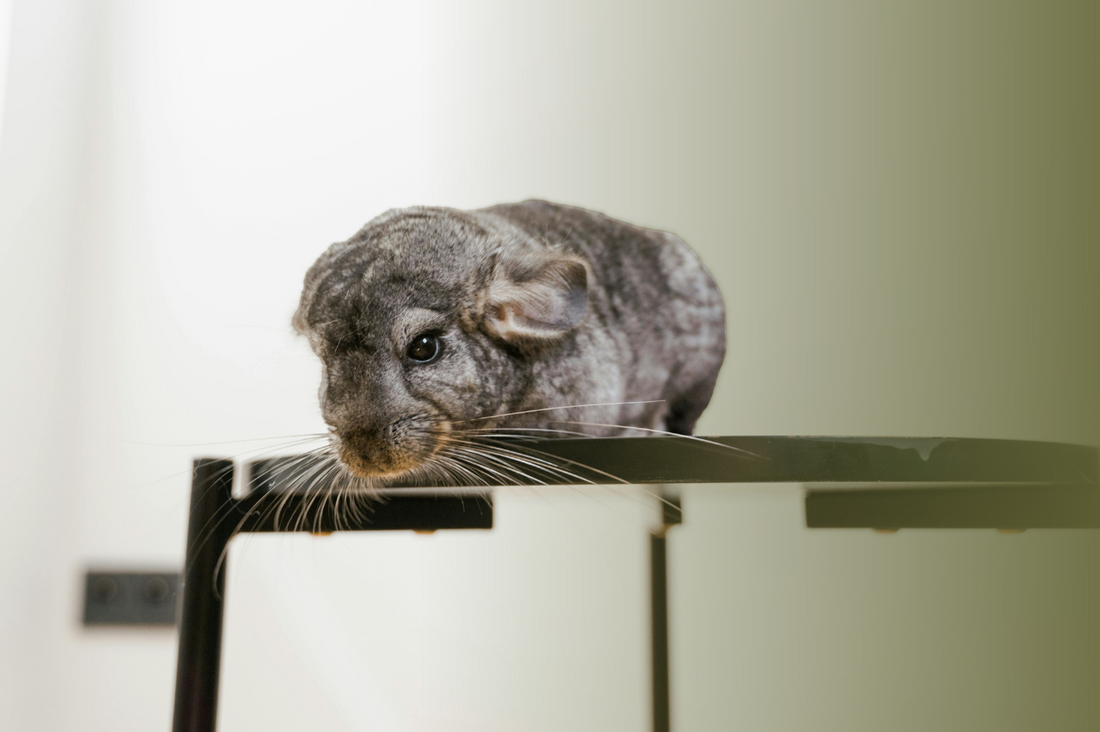
How to care for a chinchilla
Chinchillas are cute, small, active and intelligent rodents, but they require specific care to keep them healthy and happy. Known for their soft, gray and dense fur, chinchillas have certain needs that can lead to health problems if neglected.
Chinchilla care.
5 most important tips that will help you prepare for raising a chinchilla.
1.Cage and environment preparation.
Before purchasing a chinchilla, there is a lot of work to do - prepare the living environment for a new resident. Chinchillas are extremely active animals that love freedom and movement. This means that their cage must be spacious enough so that they can move freely, jump and play in it. It is recommended that the cage be at least 60 cm wide, 60 cm high and 90 cm long, but a larger cage would be even better. The floor of the cage should be wooden or porous. In no case should you choose a wire floor, as this can cause ailments that can develop into serious problems with the chinchilla's feet. Chinchillas are mobile animals, so the cage must have a platform or several on which the pet can both explore the environment and rest. It should also be mentioned that chinchillas are nocturnal animals, so these rodents need darkness and peace during rest, for this reason the cage should definitely be equipped with a shaded area .
2. Nutrition and water.
Chinchillas are herbivores, so they only eat plant foods, so it is important to ensure that their diet is balanced and varied. Chinchillas' main source of food is hay , so it must always be available. Hay provides the necessary fiber and helps maintain healthy teeth and digestive system. You can also give chinchillas specialized pellets , but their amount should be limited so that the pet does not overfeed and become ill due to excessive calorie intake. It is also important not to forget about other greens. Give fresh fruit or vegetables from time to time. A small amount of apple slices or carrots may appeal to chinchillas. The main thing is not to give them too much to avoid constipation or digestive problems. Like other animals, chinchillas must have constant access to fresh and clean water . Special drinking bowls can be used to keep the water clean and free from contamination.
3. Coat and its care.
Chinchillas have very soft and dense fur that requires special care. Before purchasing a chinchilla, it is important to familiarize yourself with the peculiarities of fur care for these rodents. It is important to remember that it is not recommended to bathe chinchillas in water, as water can cause skin problems in the long term. Instead, we suggest bathing chinchillas in dust baths . You can purchase these special dust baths online. Bathing can take place 2-3 times a week. It is also important to talk about combing the fur. Combing the fur is not necessary, but if the chinchilla's fur sheds intensively, we recommend gently combing its fur.
4. Activities and classes.
It is equally important to create good conditions for this pet to move and act while in a cage. One of the not only fun, but also useful activities can be various chews , made of wood or rattan, as well as grass and other natural materials. Such chews are very useful for chinchillas, because they encourage the use of teeth and maintain optimal tooth growth. Also, an obstacle course can be a great activity for this rodent. However, when creating a homemade course, it is necessary to remember to ensure safety and stability.
5. Cleanliness and its maintenance.
When raising a chinchilla, it is important to ensure constant cleanliness in the living environment. When cleaning the cage, one should not forget to carefully clean not only the walls and floor, but also the food bowl, water bottle, platforms, toys or other accessories in the cage. If hygiene is not maintained, chinchillas are at risk of becoming infected with parasites . The following main ailments can give away the presence of parasites in the animal: bald patches, sores, a sudden decrease in appetite or a swollen abdomen.
What to do if you notice one of these ailments?
Seek immediate help from your local veterinarian, who will help you determine exactly what is wrong with your rodent, prescribe appropriate medications to treat these ailments, and provide clear instructions on how to safely provide treatment at home.

